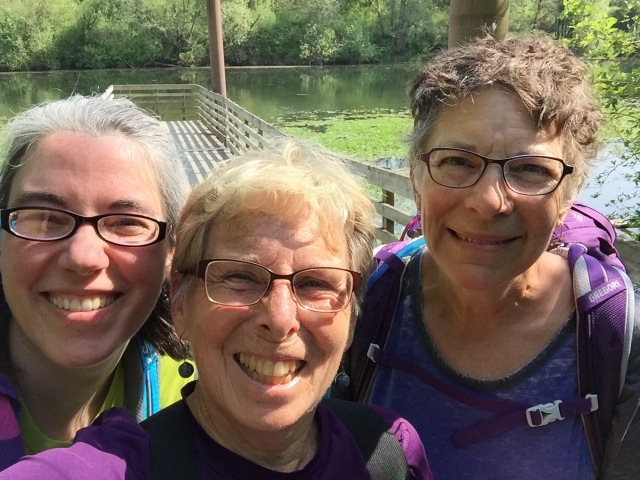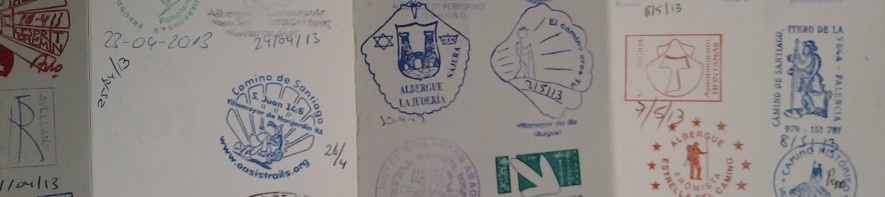
A close encounter of the growling kind

I’d only been back from Spain three days before I headed to the mountains to a place my heart calls home. When Camino-induced foot pain hobbled me, and I didn’t think I could walk another step, thoughts of Breitenbush Hot Springs renewed my flagging spirits. I planned this retreat long before leaving for Spain thinking a week in the woods would restore my body and hopefully, in keeping with their motto, bring my life back into balance.

Breitenbush was the first place where, many years before, I’d taken my first-ever retreat as a new Oregon transplant from the East coast. Here I learned the art of self-care, of listening to that tiny voice of guidance within, and the value of taking time out of life. Walking the labyrinth, soaking in the natural stone tubs, and laying prone in the sanctuary under towering, ancient cedars showed me how to surrender and let the earth and the Divine hold me up. This week was meant to be my reward for walking the Camino, sweet relaxation after so many miles of walking.

*    *    *

At daybreak, the distant roar of white water awakened me. A smile crept across my face from the pride of having braved a night in a tent alone. At dusk the evening before, a barred owl had visited me and hooted over my tent. Whoo-cooks-for-you? Whoo-cooks-for-you-all? he asked over and over. Weren’t owls an omen of wisdom and clear sight in darkness? I felt graced by his presence and protection, finding the courage to face my fear of the dark. Now the morning’s swirling birdsong called me out of my cozy bed. As I dressed, pulling on socks and pants evoked memories of my morning pilgrim ritual, and a powerful urge to keep walking surged through my bones.

Located high in the Cascade mountains, the center’s gorgeous trails surround the area and meander along a glacially-fed river. That’s where I’ll walk. I decided to do the whole seven-mile loop.

Despite the lush beauty of the wilderness, walking alone in the woods terrifies me. Oregon is home to cougars and bears. If this fact wasn’t enough for my overactive imagination, occasional reports of attacks and close calls fed the fear. I don’t like finding myself smack dab in the middle of the food chain.

Despite my clear intention relax and replenish for a week, the hike called me.  I’m stronger now, I thought. I walked across Spain, for crying out loud. I can do anything. Why the heck not face all of my fears? Certainly I couldn’t be that hard to be alone in the woods. Besides, I thought bravely, the likelihood of encountering a wild animal is so low. I’m sure it will be fine. 

Tightening the laces on my well-worn trail runners, I set out, feeling every bit the happy pilgrim-self again. The first mile was beautiful, a soft dirt trail winding along the river and its gurgling tributaries. Crossing log bridges, I followed the signage through stands of old growth cedar, fir, and hemlock. The high, broad canopy dappled the forest floor and ferns with polka dots of sunlight.

When the ascent began, everything changed. Away from the river, the air seemed drier and a spooky quiet settled in. Not even a breeze rustled the treetops. Wild rhododendrons formed a dense understory, absorbing sound and blocking any view of the forest around me. My contentment vanished. I grew anxious. To ward off any large creatures waiting around the next corner, I began to sing aloud.

Higher and higher, the trail narrowed and foliage reached into the path. As I passed, a branch snapped back and it me. I yelped in alarm. On edge, I heard a sound that stopped my heart in my chest: a growl. A bear. I was sure of it. Ice cold sweat covered my body. Oh, my God. I knew this was going to happen. I knew it. I’m going to die now. 

My heart thudded wildly. Do I keep walking? Hide? I couldn’t tell from what direction the sound had come, and I couldn’t see anything. Just keep walking. The adrenaline fueled me forward.

I gulped air as I tried to keep singing, “Birds flying high… You know how I feel…” Feeling Good was such an ironic song choice. Several agonizing minutes later, I still hadn’t seen the creature. Any creature.

I began to calm slightly, when I heard it again — only this time the growl had a clear source: a diesel engine revving in the distance.

“Ohmygod!” I laughed, exhaling with relief. Not a bear. The retreat center’s construction crew must have started their morning shift — and the big backhoe — and the sound traveled easily up the river canyon. I’d never been in danger.

When I had my wits about me again, I reflected on my “brush with death.” How often I take tiny bits of information and spin them into a wild worst case scenario, consequently raising my blood pressure sky high. This ability to invent something awful from nothing squelches my ability to be happy and present.

The walk I was on surrounded me with fifteen-foot rhododendrons blooming in frilly pink profusion, and all I could think about was how I might die between the teeth of whatever lurked behind them. I had totally missed the beauty.

The only thing keeping me from happiness are my thoughts.

Although I couldn’t will myself to cease feeling anxious, I spent the rest of this hike focusing on the beauty of small details around me. The forest floor opened up again and the trail became difficult, but I noticed sunlight shimmering through a cobweb, spied a plate-sized mushroom growing overhead, and heard the trickle of new-born streams.

The present is where life’s gifts wait to be discovered. The past has its allures and the future its uncertain opportunity, but that growl in the bushes might just be a blessing. This lesson wasn’t lost on me; I spent the rest of my week in the mountains soaking in the spring-fed hot tubs, rather than hiking the forest — just in case.
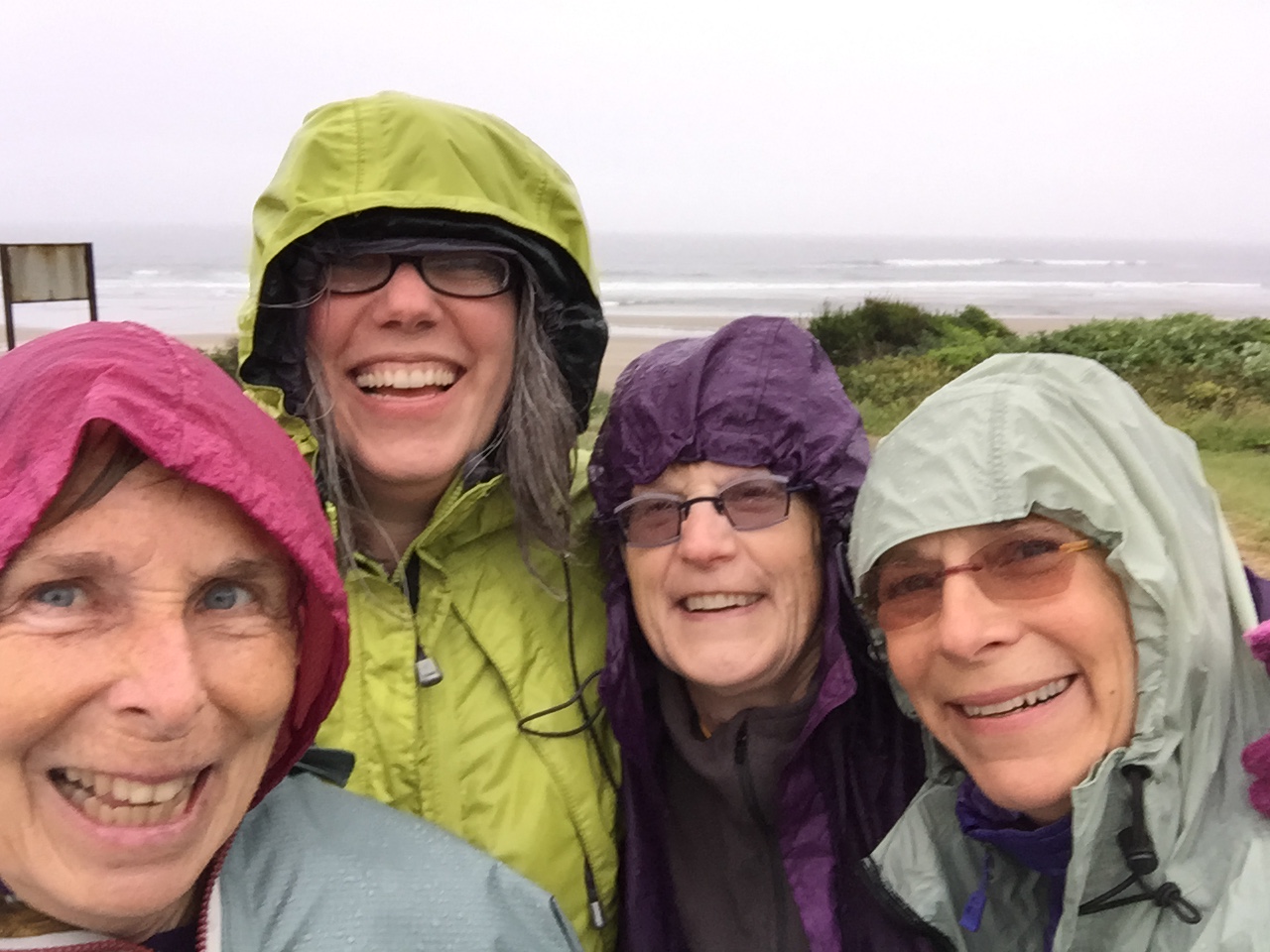


Peregrinas in the rain: Celebrating my second Camino anniversary

Sometimes in life you just have to go it alone. You have to dig deep and find resolve within yourself to face a daunting mountain. With the outcome uncertain, you battle the terrain and your own inner demons. At the top, you feel proud, courageous, and free. You’re a hero!

That was me in 2014, setting out to commemorate my one-year Caminoversary. Mired in depression, isolation, and inner struggles over the twelve months that followed my pilgrimage, I didn’t know if I would ever be happy again. But when I awoke on June 1—one year after watching the sun set with Meg in Finisterre—I took myself on a solo hike that involved conquering a literal mountain. This small-but-personally-heroic act set everything in my life back on course at long last. The accomplishment was mine alone.

Being strong isn’t everything, though. You probably know someone in your life (possibly you) who tries to do everything themselves. This habit can have tragic consequences if “being strong” prevents you from connecting with and experiencing support from other hearts. Sometimes the most radically courageous act you can take is to stop doing for yourself and to seek out the healing of friendship and the blessings of community.

That was my Caminoversary lesson this year.

*     *     *

When I thought about celebrating my two-year anniversary, I knew wanted to do the same hike as last year, a ritual on the beach, and to watch the sun set over the Pacific while munching on special snacks. This year, though, I envisioned having company. This inclination surprised me, but I followed it. I asked some Camino friends to join me for the day and got an enthusiastic response. Elaine and Carol are both past-peregrinas, and Nancy is walking this fall. I was delighted.

But here’s where things get a little wild: community has an energy and will all its own. I discovered (once again) that I can’t control everything. (How many times will life give me this lesson before I get it—and learn to trust it?) Nancy opened her beach home to us with an invitation to stay overnight (sparing us all an hour-plus drive home). This was a delightful twist, if not in my original vision. Soon there were carpool questions and food discussions and—as it got closer—weather concerns. Then I hurt my knee and couldn’t hike at all.

When we all convened on the actual day, thick dark clouds threatened as we talked about our options.

“We won’t be able to see a sunset because of the clouds,” said one.

“And the beach is really windy, so maybe we can skip that part,” said another. I started to worry that my intentions would get squashed before we’d set foot outside.

“Or you guys could do the hike without me and I could meet you at the beach later,” I suggested.

“No, we can’t leave you behind,” said another.

It was one of those messy, awkward what do I do? moments. In the past, I would have just gone along with the group—or subtly tried to push everyone toward my idea, attached and unyielding. But that was the old me. Instead I stepped up and risked being courageous with my friends:

“I agree that the weather’s iffy. It’s not about the hike so much or even watching the sunset,” I told them. “I think what’s most important to me is doing a ritual on the beach with a bonfire. Does that sound okay to you?”

Nods of assent followed.

“Could we do it this afternoon? That way, we can just stay in afterwards and relax together over dinner.”

“Sounds good to me.” And it was settled.

This may sound like a simple negotiation, an unexceptional conversation. In truth, I was facing a lifelong fear. Instead of being compliant or accommodating (and inwardly resentful later on), I’d struck a balance between authentic honesty and collaboration. Together, we found a solution that met the needs of all present. I was thrilled.

*     *     *

Decked out in billowing ponchos, we found a sheltered spot on the beach that was protected from the worst of the wind. My sore knee made me gimpy, but I encouraged my friends to take a walk by the surf while I started the bonfire. As it crackled, I wrote in my journal with sounds of ocean waves in the distance.

When my peregrina friends returned, we did a short ritual. Each of us wrote lists of things we wanted to release from our lives. After sharing aloud, we tossed the crumpled notes into the fire to symbolize their release and purification.

Then I shared the tradition of Bugles snacks, wine, and dark chocolate that started at my original Camino-ending ritual. From my bag I pulled out a nice red and, after pouring it into plastic cups, we toasted each other. I shared the words of the friendly German guy on Finisterre: “For to celebrate!”

As we sipped, laughed, and swapped stories, it began to rain in earnest. No one budged.

Are they really happy out here? Surely, they’re miserable and just humoring me. Instead of fretting, I simply asked. Their replies were unanimous.

“I’m fine!”

“The fire’s warm and I’m happy.”

“My poncho works great!”

So we stayed put, making a semicircle in the damp sand. I grinned, feeling deeply touched by their support of me and impressed by their contentment in the sloppy weather.

“Thanks for coming out here, you guys. You have no idea how much this means to me.”

Here I am, letting myself receive support and love. What a difference a year makes.

Many pilgrims use the expression, “the Camino provides,” to describe how the very thing you need appears on the Way in surprising and unexpected ways. What most people don’t realize—and I’m happy to share—is that the Camino keeps on giving long after you finish walking.

Last year, on my first Caminoversary, I learned to be my own hero.

This year, instead of being alone, I’m surrounded by inspiring heroes who are on the journey with me. And I with them.

IMG_5289
Thanks, ladies! Ultriea! ❤

The Camino continues to provide. ❤

Sock it to me: A post-Camino closet revelation

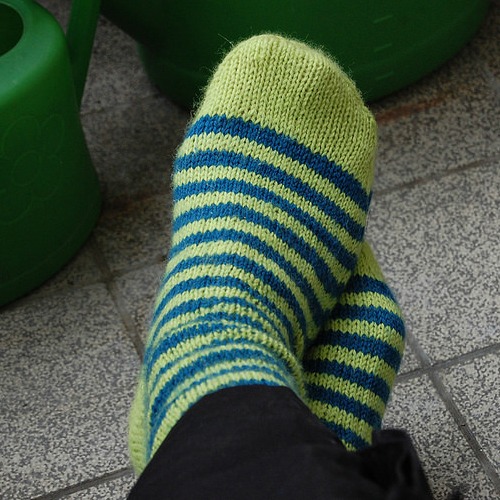
stripey socks
Used with permission CC

If you asked me where my floss was, I’d whip out its container in seconds flat. No matter how inconsequential, I knew every item’s location in my pack.

In fact, as a pilgrim, all my items had an assigned place within the pockets and pouches of my backpack. My blanket, for example, I rolled up tightly each morning and tucked close to my back, clothes in front. My clean socks and undies lived in one plastic bag in the bottom compartment, and the soon-to-be-washed ones in another. There’s nothing in the world so wonderful as a fresh pair of socks.

When you carry fewer than one hundred items on your back for seven weeks, you learn the value of your possessions. Though replaceable, each item was precious.

So maybe you can imagine how I felt when I stood before my closet, naked and clean from my first luxurious shower at home. The open doors revealed an abundance of colors, textures, and sheer options that overwhelmed my senses. Oh, my God! The choices!

“Socks!” I shouted out to Mary, who was in another part of the house. “I have socks! All kinds of them!”

“I know!” she shouted back, amused.

“And underwear! Tons of it! Oh, my God!”

In just under two months, I had completely forgotten how much clothing I owned. Although I’ve never been much of a clothes horse, I’d worn the same two outfits for weeks—which made my closet seem like a treasure trove. Running my fingers over the soft cottons, I marveled. I felt rich.

“And I don’t have to carry any of it! Woohoo!”

Moments later, it dawned on me that this abundance also had a cost: laundry—and the dreaded tedium of drying, folding, and putting it all away. “Every item you own requires energy and maintenance,” I’d said many times while teaching my organizing classes, but now it seemed a powerfully personal revelation.

Within a couple of days, I had tried on every item of clothing I owned, resolving to keep only things that felt good on my body. That session in front of my full-length mirror yielded two bulging black garbage bags of tops, sweaters, jeans, and shoes for donation to a local charity. I also brought two grocery bags full of nicer items to our local resale shop and exchanged them for cash.

It gave me an amazing feeling of lightness.

Though I would never get my closet down to the fifteen pounds I’d carried in my pack, finding balance between abundant choice and simple essentials was a way to honor one of my many Camino lessons.

Even after all that purging, I still kept all my socks.

Writing about the land with no arrows: what happens after Santiago

yellow arrow on the Camino de Santiago

My reason for walking the Camino involved a search for answers about life. When I arrived home, the scale tipped with further questions, instead of resolution. As someone who likes tidy conclusions, I wanted my pilgrimage wrapped up with a neat bow. That’s not what I got.

As the Camino blues plagued me, I started writing this blog hoping for catharsis and relief.

Over time, the practice of describing each day on the Camino de Santiago became a form of meditation, a tool for examining the significance of my journey. As I wrote about the places, people, and events of my seven-week pilgrimage, my blues began to dissipate and the meaning of personal insights became clearer. Ultimately, this practice helped me move through my deepest unresolved questions into understanding and transformation.

If you’re a regular reader of other Camino blogs, my writing is about to veer away from the typical story of familiar Camino landmarks and daily rituals. I’m about to venture into the land with no arrows where the once-clear purpose of getting to Santiago is gone, but a new destination slowly emerges.

After the Camino ends, the pilgrim’s challenge (if s/he chooses to accept it) is to discover a new way of being in his/her life, based on the insights s/he gained on the Way. To do this, s/he must walk down many frustrating paths in the wrong direction. S/he must enter blind alleys in search of his/her guiding light. Once there, s/he may realize this was never the way in the first place. Eventually, the pilgrim finds renewed peace in discovering that the answer was in her/him all along. The new path is to live that peace every day.

Guided by the truths of the Camino, I went from enlightened pilgrim to lost soul and then found a new way. In the posts that follow, I hope to inspire you to stay on your post-pilgrimage path—for your own field of shining stars awaits.

Warmly,
Jen

Still here… still writing…

“Writing the hard thing will require a great deal more of you than had you taken a safer route, but once you’ve committed to it and bled all over the page, you’ll find it was worth the effort.”

.

While this quote seems a bit dramatic, I must admit that I’ve written and rejected at least six posts describing the events that took place in the wake of my pilgrimage. When we last saw our heroine, she was flying home from Dublin.

Though I want to explain what happened next, I keep not finding adequate words.

What I do know is this: the physical pilgrimage was only half the journey. The other half unfolded over the year(ish) that followed. In a few short months, I went from the highest spiritual high to a deep low. Ultimately, I found my way through. It was worth the effort.

So I wanted you to know that I am writing the hard thing. But I also want to write it well. The story will continue soon.

Yours cheer of courage! and animo! are welcome. Also chocolate.

Watch what you wish for: The most surprising gifts of my Camino

Before setting out to walk the Camino de Santiago, I stated confidently, “I want to be changed by this experience” and I meant it. My life had been comfortable up to that point, if a bit stalled, and the calling I felt to walk it was both exciting and daunting.

“I want to be made uncomfortable,” I told my friends. “I want to be in unfamiliar places, to not know where I’m going to sleep at night or where my next meal comes from, and see what this teaches me.” Truly, I had no idea what this intention would set in motion.

Change does not come easily to me. Despite being a seeker, I will defiantly ignore signs, resist messages, and otherwise thwart my own awakening because change is so freaking uncomfortable. Not surprisingly, my pilgrimage to Santiago was a spiritual two-by-four. Instead of a cozy, controlled life, I plunged—body, mind, heart, and spirit—into a nomadic experience across northern Spain. The lows were grueling, lonely, and painful, at times causing me to doubt everything about the journey and life. The highs of this experience were delightful, awe-inspiring, and liberating.

The relentless extremes over seven weeks rattled my equilibrium. Quiet woods gave way to cacophonous cities. Rugged mountain paths contrasted with miles of bone-jangling concrete. The delight of new friends conflicted with my desperate need for solitude. In jam-packed albergues, feelings of loneliness seemed laughable. In a single day, my emotions ranged from irritation to joy, from despair to profound gratitude.

Since I had limited control over the extremes of my environment, I was forced confront my rigid attachment to external conditions and then let them go. I had to. I kept running into metaphorical brick walls thinking things shouldn’t be the way they are. I shouldn’t have this pain in my arches. That guy shouldn’t be snoring. It shouldn’t be raining. I shouldn’t be attracted to people I’m not married to. 

The Camino kept showing me how my misery (or happiness) always starts with my thoughts—not the circumstances around me. I got this lesson repeatedly, each one presented a greater challenge. The Divine was determined to manifest my intention.

Slowly, I became content—no matter what was happening. As I shed my judgments, attachment, and dog-like desire to be liked, I began to find a sense of balance residing within. My ego—my me-ness—began to wear away until I was luminous. “You look ten years younger,” one acquaintance exclaimed.

In this spacious lightness, I found clarity where there had once been murk. Forgiveness took the place of blame and regret. Laughter and honesty replaced my habitual cautious smallness.

My emotions flowed. I wept tears of frustration, fear, joy, warmth, loss, exhaustion, anger, gratitude. I laughed—genuine, un-selfconscious horsey laughing. Snort laughing. Bent over, gasping for air laughing. Where did that come from? How long had I been living under a thick crust of seriousness?

The Camino fundamentally reoriented me to claim my own power. When I found that my thoughts and attitude couldn’t rescue me, I let myself fall into a God-shaped net. As a self-avowed control freak, this was truly a miracle. Learning first hand that the Divine supports and loves me, I began to experience soul-level trust that things would unfold exactly as they should. Spiritual writer, Anne Lamott, says there are two kinds of prayers, “help-me-help-me-help-me” and “thank-you-thank-you-thank-you.” I got really good at them both.

What surprised me most about the Camino was the community. Although I’d obsessed over every minute detail about what to pack and how much it weighed, I didn’t give a single preparatory thought to the people I would meet on the Way. Apparently, when I stated my intention to be changed by my experience in Spain, the Divine lined up incredible men and women who would reveal the perfect lessons for me. Through them, I learned that I am a small part of a beautiful, complex web of souls on a journey toward wholeness—and that we can contribute much to each other’s lives if we allow it.

The Camino wore me thin in the best possible ways and I became free. My intention had come to fruition because I did change. I discovered the truth about who I am and what I have always been but had forgotten: whole.

This only took me forty-nine days, fifteen pounds of gear, and a flight to Europe. Okay, that and a dogged determination to mine every moment of this pilgrimage for inspiration. I loved it. I hated it. And now I know why the Church recognizes pilgrims for our efforts and forgives our sins; if you’re paying attention to the inner heart-and-soul journey as you walk the physical one, the Camino will cleanse you from the inside out.

The only thing to fear

“Your antagonist is fear,” she said.

She is one of the insightful people in my writing critique group of seven people, all bound to help give birth to our respective books.

For my submission last week, I turned in some preliminary writing that was more brainstorming and plotting than actual prose. I hoped for encouragement.

“And this,” she said, holding up my eight sheets of ideas, “looks like fear.”

I was shocked. This was not at all the kind of feedback I was expecting.

She looked me in the eye and said, “You just need to write. Stop thinking and start getting the words on the paper.”

I left the meeting feeling hurt, called out, and pissed off. I cried in the car ride home.

But after a few days of thinking, I realized she’s right.

*   *   *

Though I hardly ever listen to the radio, I turned it on yesterday and Sara Bareilles’ song Brave was on. Have you heard it? It’s amazing.

Say what you wanna say
And let the words fall out
Honestly I wanna see you be brave . . .

And since your history of silence
Won’t do you any good,
Did you think it would?
Let your words be anything but empty
Why don’t you tell them the truth?

Okay, Universe! I get it!

Sheesh.

*  *  *

Reading about someone’s writing process can be as fun as watching them gaze at their own navel. I won’t belabor my point, but I will say this: Telling the truth is HARD. No less than three people have asked me in the past week, how do you do it? How can you write about real people you know? Don’t you worry?

YES!

I worry about making my partner look like a schmuck (which she most certainly isn’t). I worry that “Meg” will never speak to me again. My mom and aunt read this blog, as do some of my clients, my boss, and many friends—both from the Camino and at home. I worry about what they will think.

Despite the pressure I feel to say everything nicely and keep topics unoffensive, I have to be brave. I have to fight my lifelong urge to be tactful. I have to just tell it like it is.

Here’s why: I’ve met too many pilgrims who went into their journey hoping to be changed by it, and did not know how to sort out the experience afterward. Telling the truth is a gift to myself and—hopefully—to anyone who struggles after their Camino.

I’m taking a week to work on my writing and may not update the blog for a bit. I’ll be back with more tales that aspire to inspire.

*   *   *

It’s not ALL hard or scary, though!

In the last week, I’ve taken three different hikes with wonderful people. Getting outdoors is awesome nourishment for the heart and soul.

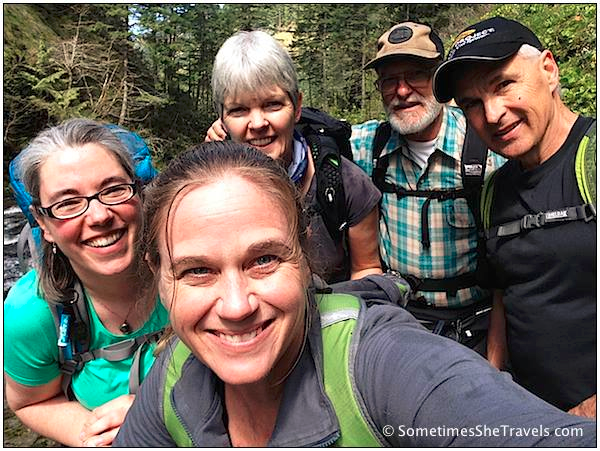
The first hike was a fourteen-miler on Eagle Creek with new Camino friends—including one of my favorite bloggers, Elissa Green from sometimesshetravels.com.

(c) elissa green
Used with permission — photo credit

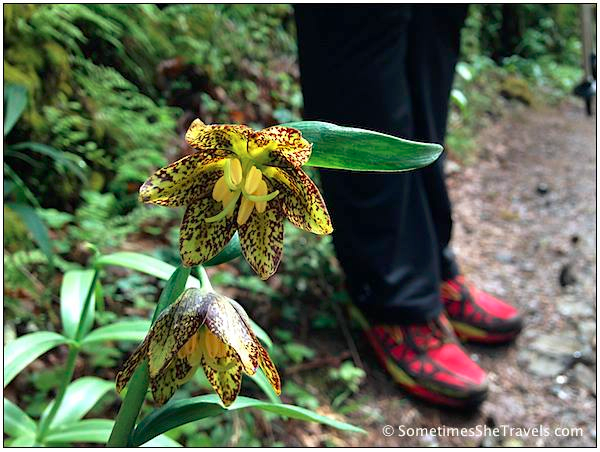
I loved this photo Elissa took of my favorite hiking shoes (Brooks Cascadias) and a Checker Lily.

(c) elissa green 2
Used with permission — photo credit

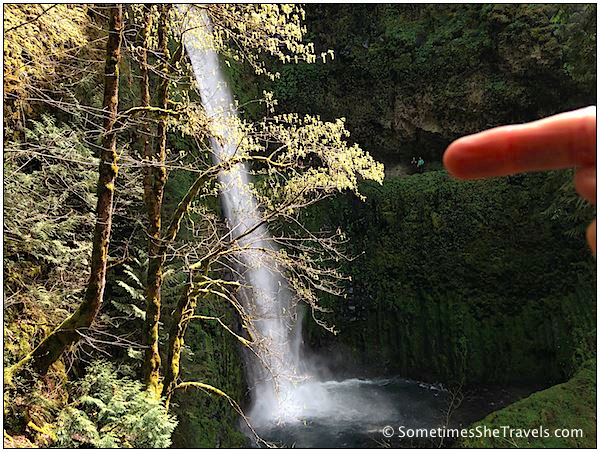
Everyone talks about these cool falls with the tunnel carved into rock behind them. Elissa is pointing to me and Laura. (Don’t look at this one, Mom!)

(c) elissa green 3
Used with permission — photo credit

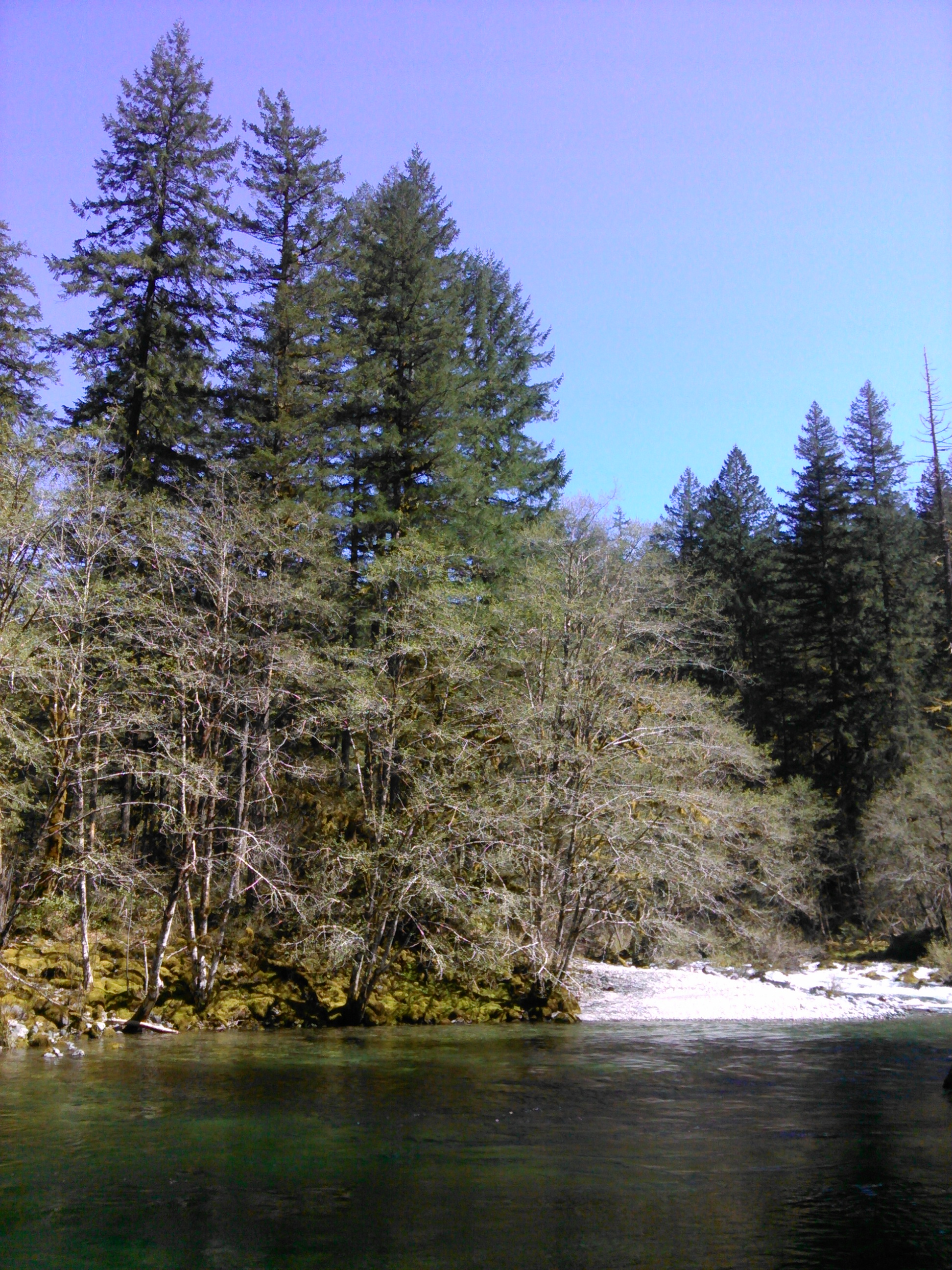
Then! Mary and I took a hike on Saturday in the Opal Creek area on a gorgeous day and saw tons of wildflowers. At one point we could hear the rushing sounds of three separate waterfalls. Amazing!

IMG_20150418_134049_381 (1)
Last, I met Carol and Nancy (more Camino friends) for a hike around Willamette Mission Park. We talked gear, albergues, and life. Such fun!
(c) carol routh

I counted—that’s about 23 miles in one week. Yay!

Let’s get out there be brave together!

Essential packing guide for the Camino de Santiago

Lots of soon-to-be-pilgrims agonize over what to pack for their Camino. I know I certainly did!

When I’m not writing about the Camino, I’m actually a professional organizer and, this week, I got an idea for a new way to approach packing for the Camino. Although “how to” guides are not the norm on my blog, I’m excited to share this!

Remember those “choose your own adventure” books? My idea combines this with a packing list, leaving lots of room for personal preferences. Best of all, it removes some of the stress and confusion.

A request: If you like this list enough to share it, please send friends a link to this post, rather than a copy of the original document.

Here it is! Jen’s “Choose Your Own Adventure” Camino Packing List!

Big thanks to Kim, Lisa, Rebecca, and Karen for your ideas, help, and extra eyes!

Want to see what I ended up putting in my own pack?

I’d love to know what you think! ❤

How the light got in: A post-Camino reflection

We weren’t terribly observant Catholics when I was growing up, but my whole family was in attendance at my first holy communion—the first time God spoke to me. I was holding a hymnal in my kid-sized hands as the organ pealed its first crystalline chords.

In song, the Divine asked me, Whom shall I send?

In response, my reed-like little voice sang out, Here I am, Lord. Is it I, Lord? … I will go if you lead me.

Standing there in my veil and white lace dress, symbols of purity, I trusted with every ounce of my being that I would be led and protected always.

*   *   *

Becoming an adult made me forget. Being in the literal driver’s seat deluded me into thinking I had all the control. My unconscious mantra—Do it by yourself—taught me not to ask for help from anyone, least of all an invisible god. By the time I heard of the Camino in my later thirties, any sign of my youthful and unwavering trust in the Divine was gone.

When I heard a call to walk the Camino, my reaction revealed just how stuck I’d become: Seriously? No. Ridiculous. I don’t want to. I have no interest in Spain. I don’t like exercise and the very thought of walking five hundred miles is insane. No. I don’t want that kind of uncertainty. I couldn’t handle it.

I wanted to control. Everything.

Despite my lack of preparedness, the Camino was relentless in its pursuit of my soul. References to the Way appeared in random reading materials and unexpected conversations. Scallop shells revealed themselves in the most unlikely places. Even with all these flirtatious hints, the seeker must assent to her own transformation. Yes is just a word, but it’s astonishingly, remarkably difficult to utter. The longer I waited, the more I felt it.

It’s amazing to think about how much I fought the very thing I needed. Ego is perfectly content to sit in its own stink of self-righteous, small-minded, and destructive habits. Saying yes is terrifying because it calls us to face our own destruction. With yes, we become nothing, yet everything: luminous and present with the Divine. With yes, personality melts away. The ego wants no part in this appalling arrangement.

Eventually, I came around to a grudging admission of the spiritual merit in attempting this uncomfortable experience. Like a cautious lover, I relented. I said yes. And yet again. And again many times until I had clicked “purchase” for my airline tickets.

*   *   *

If I would be spiritually transformed by the Camino, my inner fortress of protection would have to crack. As Leonard Cohen wrote, “That’s how the light gets in.”

The Camino broke me open. It had to. I needed to find a new way of being. My years of resisting help meant I would not respond to subtle messages. Splitting open the layers of defense required hard, sometimes painful encounters until I learned to trust. It was not fun. For example, after a week of walking, my feet became so sore that I limped with every step. When I began to doubt my ability to finish the walk, I cried. I cracked open, admitting my helplessness. In this weak place, I asked for help, and some light got in.

Despite being with lovely new friends, I felt broken at times by debilitating loneliness. At one point—in a miniscule, one-star hotel room that reeked of old cigars, I thought to myself, “What would your father think of you here? This is what you’ve come to, all of what you’ve made of yourself.” These painful thoughts broke me open, and as I reached out for friendship, more light got in.

One day, as Muriel and I walked together on the meseta, she observed, “It seems like you’re sorry that you were born.” The truth of her words struck me to the core. I had no reply—only my silent agreement. For many days after she’d made this poignant observation, I reflected on my struggle to show up in life and merely take up space.

As my feet pounded the path, I listened to the wind and my breathing, and I wondered for the first time: Am I really allowed to trouble this person, or any person, with my story? Is it okay to ask for help? Or actually receive it? Am I allowed to say no or tell someone I’d rather be alone? Is it really okay for me to be here? This stripped-bare honesty helped the light get in.

In the most trying and desperate moments, my ego was smashed to shatters. Yet that suddenly-vacant space made room for my heart to open. It was a hard-earned blessing. Slowly, over the miles, I emptied out the sludge of my small living, and miraculously, despite myself, the light got in. An abundant waterfall of love, laughter, wisdom, and insight made me realized how loved I am. Pilgrimage revealed to me how to let go of my fearful striving and trust something greater than myself.

*   *   *   *   *

That isn’t the end of the story, of course.

In a workshop I attended last fall, the following words hit me like a spiritual two-by-four: Enlightenment is not transformation. ~ Dara Marks

I suddenly realized why everyone claims that the true pilgrimage starts in Santiago: the Camino is an experience of enlightenment. It gave me a glimpse, a tantalizing taste of how life could be. it showed me how I could let go and trust, how light and joyful I could be moment-to-moment.

Completing the Camino is only half the journey. Enlightenment isn’t transformation. It wasn’t done with me yet.

Like many pilgrims, I really struggled after I got home from Spain. Some people call it the Camino blues, but it’s more than that. I could not resolve what the pilgrimage had revealed to me despite obsessively re-reading Brierley’s guidebook, looking at my journal, and drinking Spanish wine with friends.

It was nice to be home with my familiar people and possessions, but I struggled with the sense that something precious was dying—something I had to hang on to no matter what. And I lost it anyway. Into its place moved unspeakable sadness and longing.

Intellectually, I knew that the second half of the journey was about learning to live my Camino epiphanies in my life. “Bring home the boon,” someone said. But I hadn’t the faintest idea how to do this. I just felt terrible. I had to shake it off somehow.

Within a few weeks, I was back to where I’d started, repeating my life-long pattern of controlling everything. My Camino had revealed that my life could be better, but I didn’t know how to get there once at home.

I got stuck for a long time. Most days felt like walking through a deep, dark cave with no exit. And, erroneously, I kept thinking, I can do this. I can figure it out. I thought had to find my way through its passages alone. This is the part of the journey many never walk, or if they do, few talk about it. In the months that followed my Camino, I went down many blind alleys, trying to find my way—out or though, I didn’t care.

After struggling for over a year, Dara’s words were like discovering a bright-yellow, spray-painted arrow on the wall of my labyrinthine tunnel: the Camino gave you enlightenment, now you must move toward transformation.

But transformation doesn’t just happen on its own; it requires assent. Last week, almost two years to the day of my anniversary of starting the Camino, I remembered. Yes wasn’t just for that innocent seven-year-old me, or my reluctant, pre-Camino forty-year-old self. It was something I would have to choose again. And again. And again.

Yes is power. Yes commands armies of angels to move heaven and earth in support of the seeker’s goal. Now I understand that yes is the key to moving from enlightenment into transformation. Say it again: yes to uncertainty, yes to change, yes in spite of fear.

In the weeks ahead, I’ll be sharing a play-by-play of my second, inner Camino. The one in which I transformed my life. I’ve talked to so many pilgrims struggle with Camino blues, my hope is that my story will help you walk your own journey that begins after Santiago—and say yes to the transformation that awaits.

Answering the call with a big fat NO

The irony is not lost on me that I’m currently writing a not-yet-published post about how 7-year-old me completely trusted Spirit … and how I said yes to my call to the Camino in order to receive the spiritual gifts from it.

I’m sitting here looking out on the garden and pouting angrily at the realization that I have to say yes again. God is calling me toward something great, something amazing, and all I’m doing is digging in my heels in defiance. No! Nonono! I want to do it myself! I’m three years old again, grabbing my toy back. I want to control my life. I don’t want to change! I don’t care if the change would be better for me; I want to stay stuck here and mope about how awful it is.

The very idea that I could just say yes to the Divine plan is anathema to my ego’s agenda.

But here I sit at the very edge of the known again, looking out into the cloud-shrouded void of God’s plan—just like I did three years ago when I said yes to walking the Camino. This moment is present for everyone, any time, on any day, but I can feel my feet dangling off this particular cliff, dirt on my pants and gravel under my palms.

Dammit. I know something awe-inspiring awaits on the other side. I just hate that can’t control what that something is or how I’ll get there. Damndamndammit!

I’m sure there are more spiritually awake people in the world who hear a call—a request by the Divine to release control—and in trust, give an unflinching yes. I am not in that crowd. For me, the choice is obvious (say yes!!), but resistance is the first and most powerful response.

My tantrum isn’t over yet, but I know where all of this is headed. I’ll bet you do too.